Digital Anchor Tenants: What Turns a Space into a Destination
What draws people to a hotel, resort, or mall?
The potential of digital anchors, seen through proven cases and numbers.
Nov 2, 2026
A whale gliding across a resort ceiling. A free immersive media space in the middle of a city. A giant sphere people travel to for a show. Experiences built with digital media are becoming the defining attractions of the places that host them. For developers and operators of hotels, resorts, and shopping centers, this opens up a new way to draw people in. This article looks at how digital experiences work as anchors, drawing on cases measured in visitor numbers, dwell time, and content revenue.
From leasing anchors to creating experiences
Every developer and operator faces the same question: what brings people here? For decades, the answer was department stores, supermarkets, large bookstores, and multiplex cinemas. Operators chose and leased these tenants for their brands, merchandise, and footfall, then arranged the space so that traffic would spread to everything around them. These traffic-generating tenants are known as anchor tenants.
As online shopping and digital content became part of daily life, the way places create reasons to visit changed too. Alongside leasing tenants that already draw crowds, operators began to design experiences that can only be had in that one place. Starfield Library, Sounds Forest, and Jewel Changi Airport are examples.
At COEX Mall in Seoul, the creation of Starfield Library came with improved circulation and new brand tenants. According to Shinsegae Property's 2018 announcement, these combined changes brought the vacancy rate down from about 7% to 0%. The case shows a signature experience being created and tied into the retail mix. [1]
Sounds Forest, the indoor garden at The Hyundai Seoul, stands out in dwell time. According to Hyundai Department Store Group, visitors spend an average of about 37 minutes there, roughly nine times the 4-minute average for fashion stores. [2]
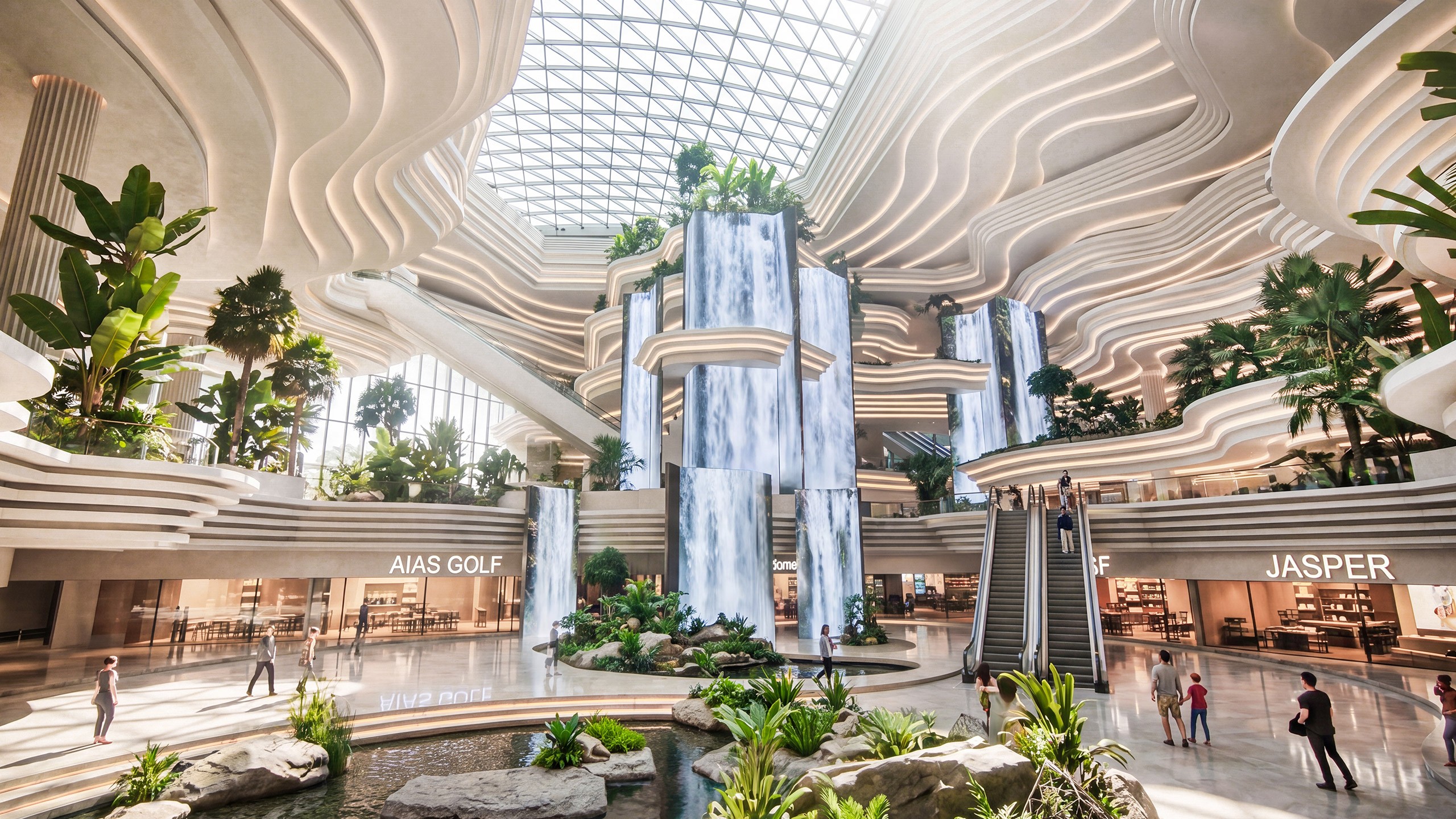
Jewel Changi Airport in Singapore pairs an indoor waterfall and gardens with retail. Its operator reported more than 80 million visits across the complex in 2024, with revenue up 5% from the previous year. [3]
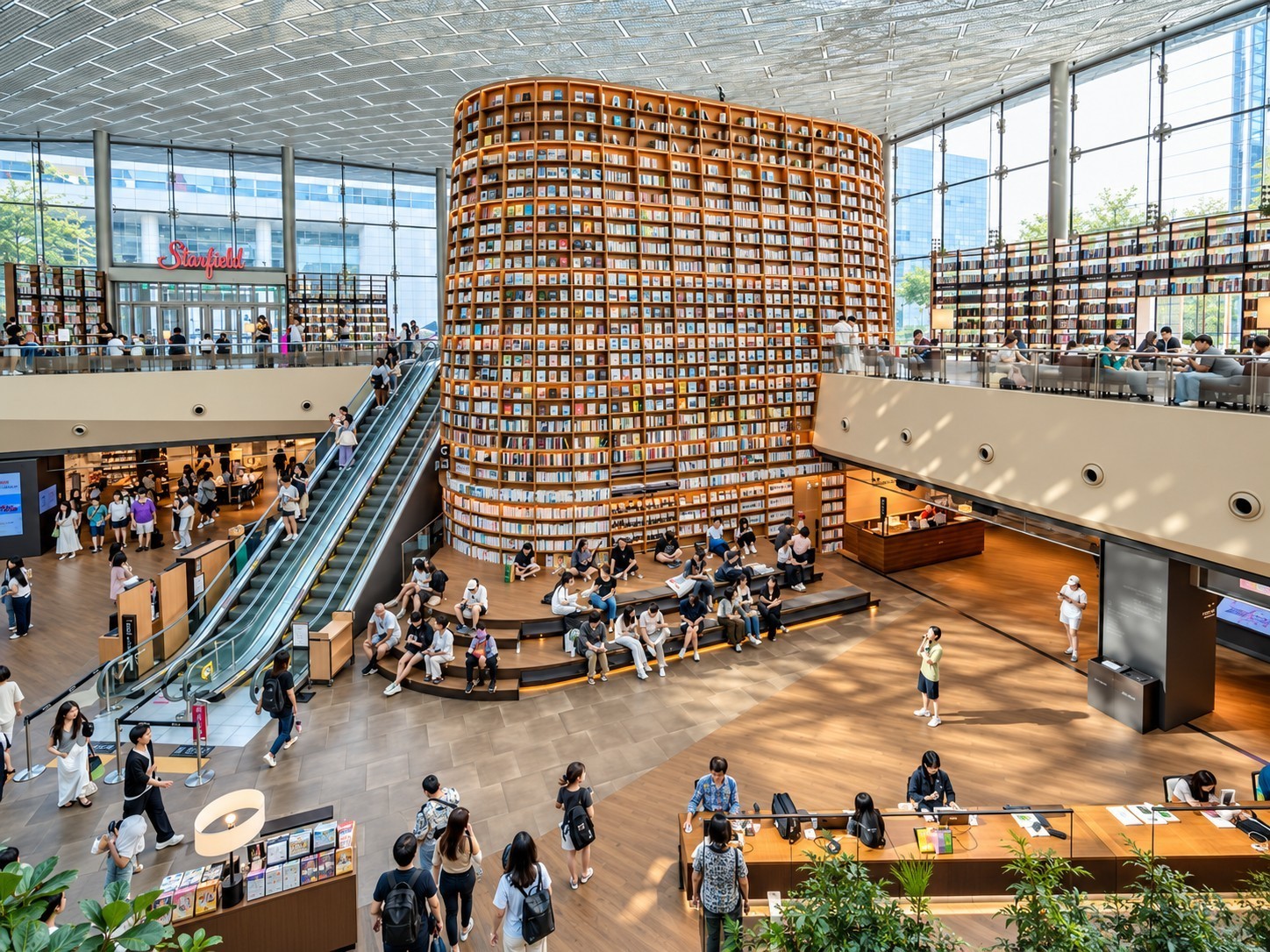
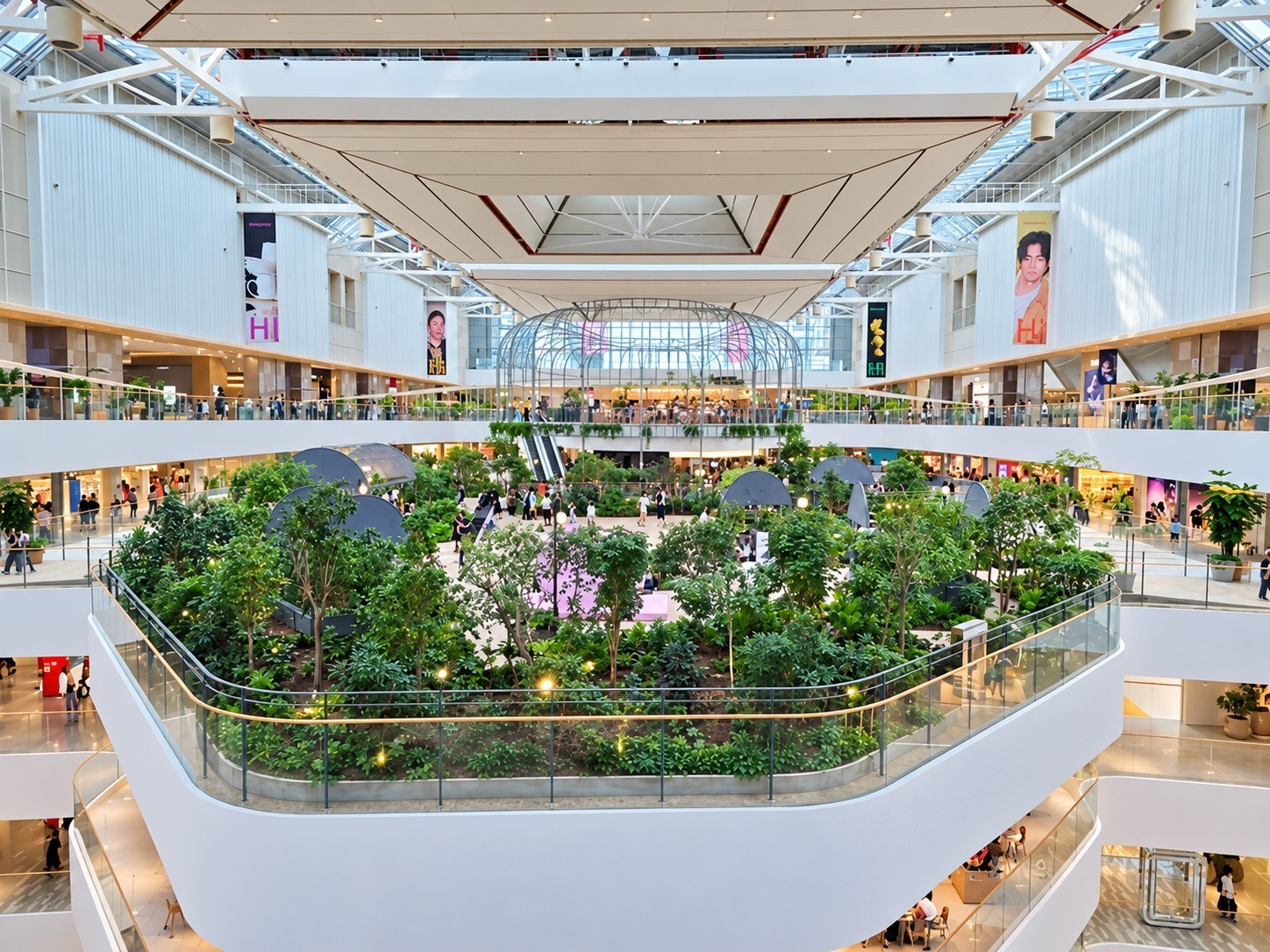
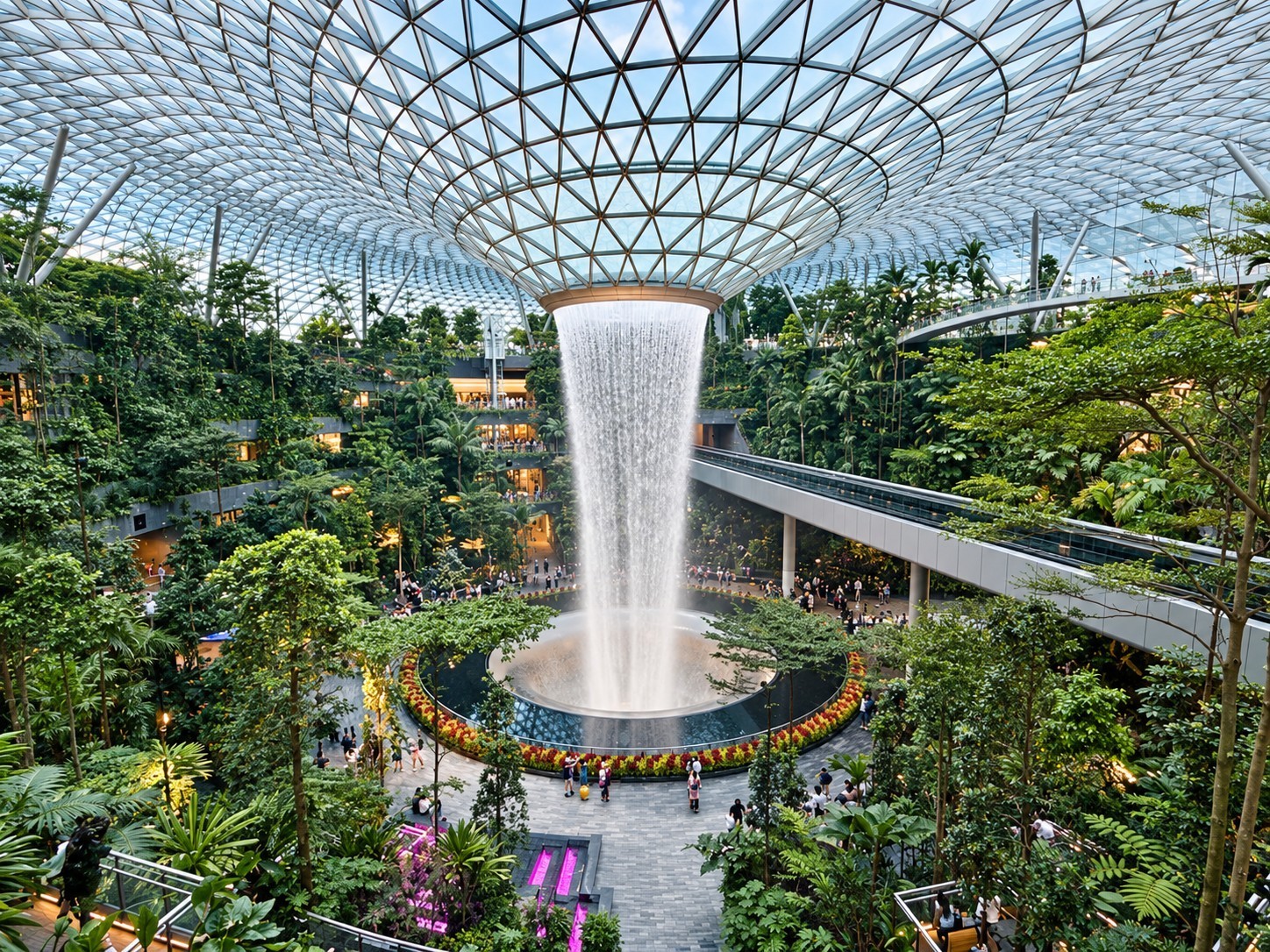
In all three, the operator designed the experience that would define the place. Choosing brands that already draw crowds is now joined by a second task: creating the experience that becomes the anchor. We can call these experience anchors. Traditional anchors and experience anchors work side by side within the same space.
Digital anchor tenants: when media becomes the reason to visit
Digital media is one of the materials for building an experience anchor. Digital anchor tenant is a term Apollon Immersive Works has defined and developed to describe experience anchors built with immersive spatial media. Immersive spatial media uses the space itself, its walls, ceilings, and floors, as the screen, placing visitors inside the scene. Video, light, and sound create scenes people want to come and see, and those scenes are planned to become the main reason to visit.
Digital media can extend a visitor's view across an entire space. Interior walls, ceilings, and the building facade come together as a single scene, and the atmosphere shifts as the content unfolds. People may wait for a particular showtime or build the experience into their travel plans. What operators are designing is not only the media installation but also the time people spend there.
Sphere in Las Vegas has turned the digital experience itself into a paid product. The venue presents media art, advertising, concerts, and immersive content inside and out. In the fourth quarter of fiscal 2024 (April to June 2024), it ran 208 shows of its immersive program, The Sphere Experience, generating US$74.5 million in revenue. That figure covers revenue from the program alone. [4]
Outernet in London combines a central location with free admission. According to its operator, the Now Building welcomed about 6.25 million visitors in its first year. That is more than the roughly 4.65 million who visited the Natural History Museum and the 4.10 million who visited the British Museum in 2022, as recorded by ALVA. Passers-by who wander in and people who came for a specific show stand in front of the same screens. Outernet runs the space by pairing free entry with advertising and brand partnerships. [5]
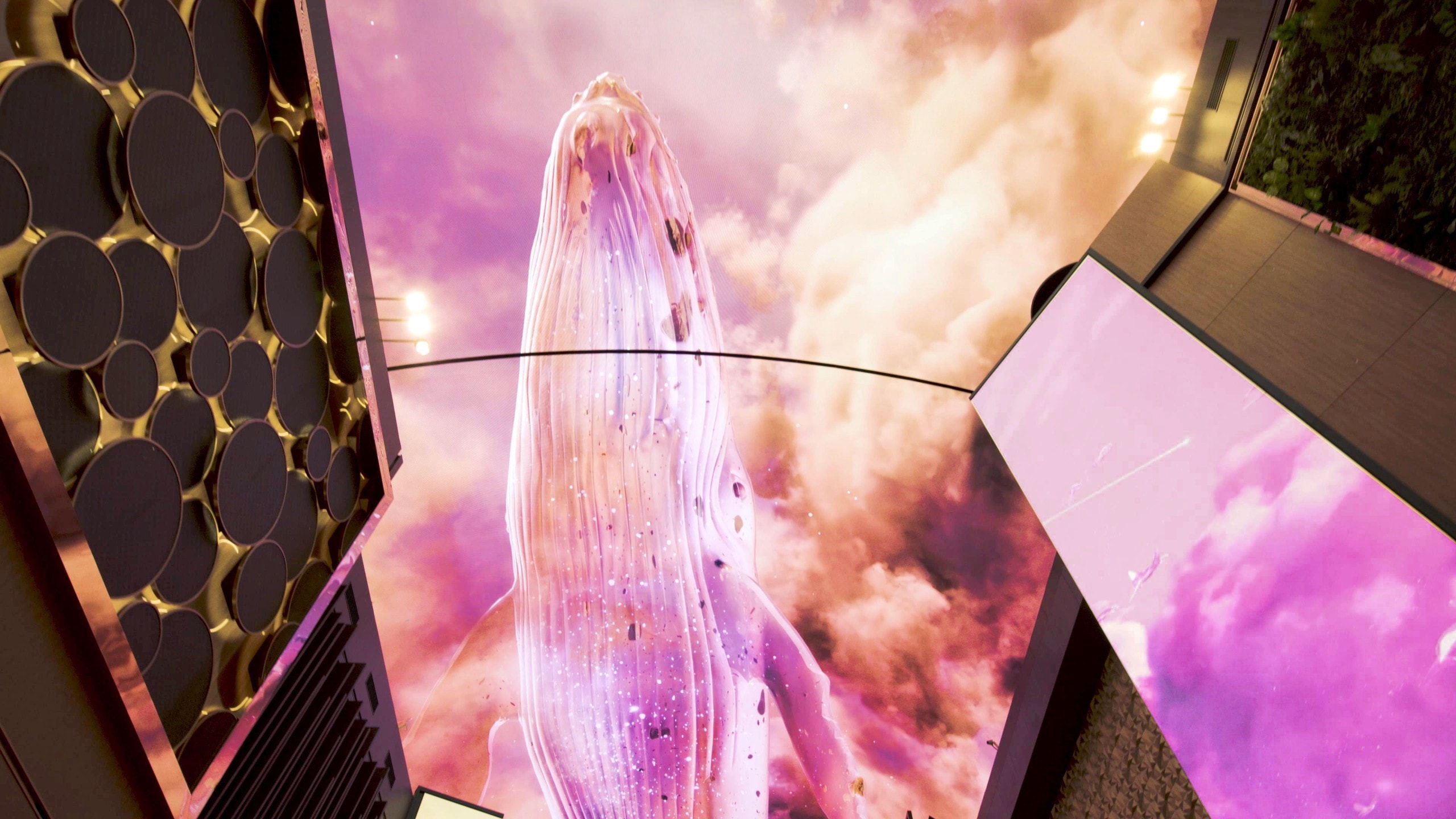
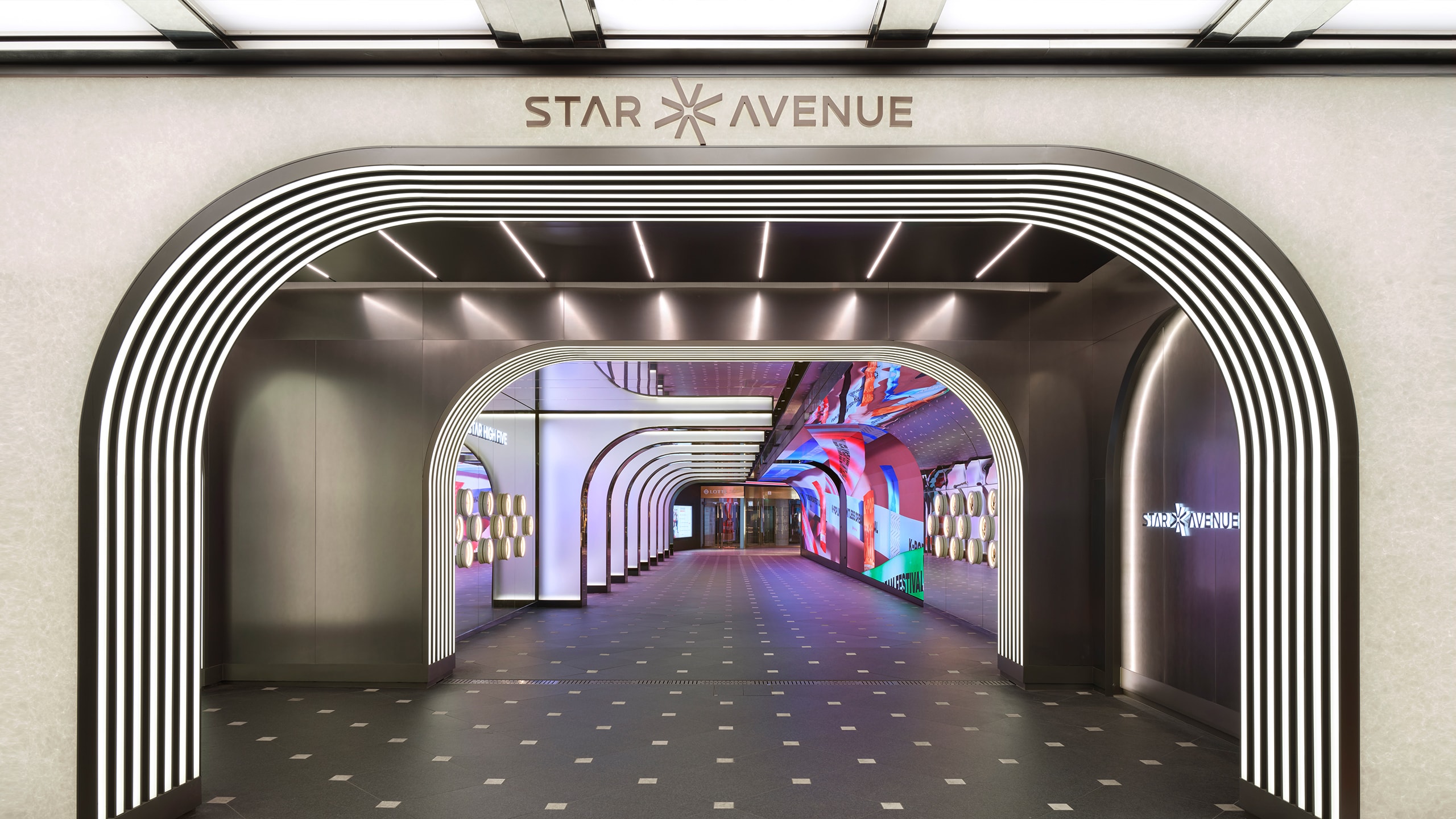
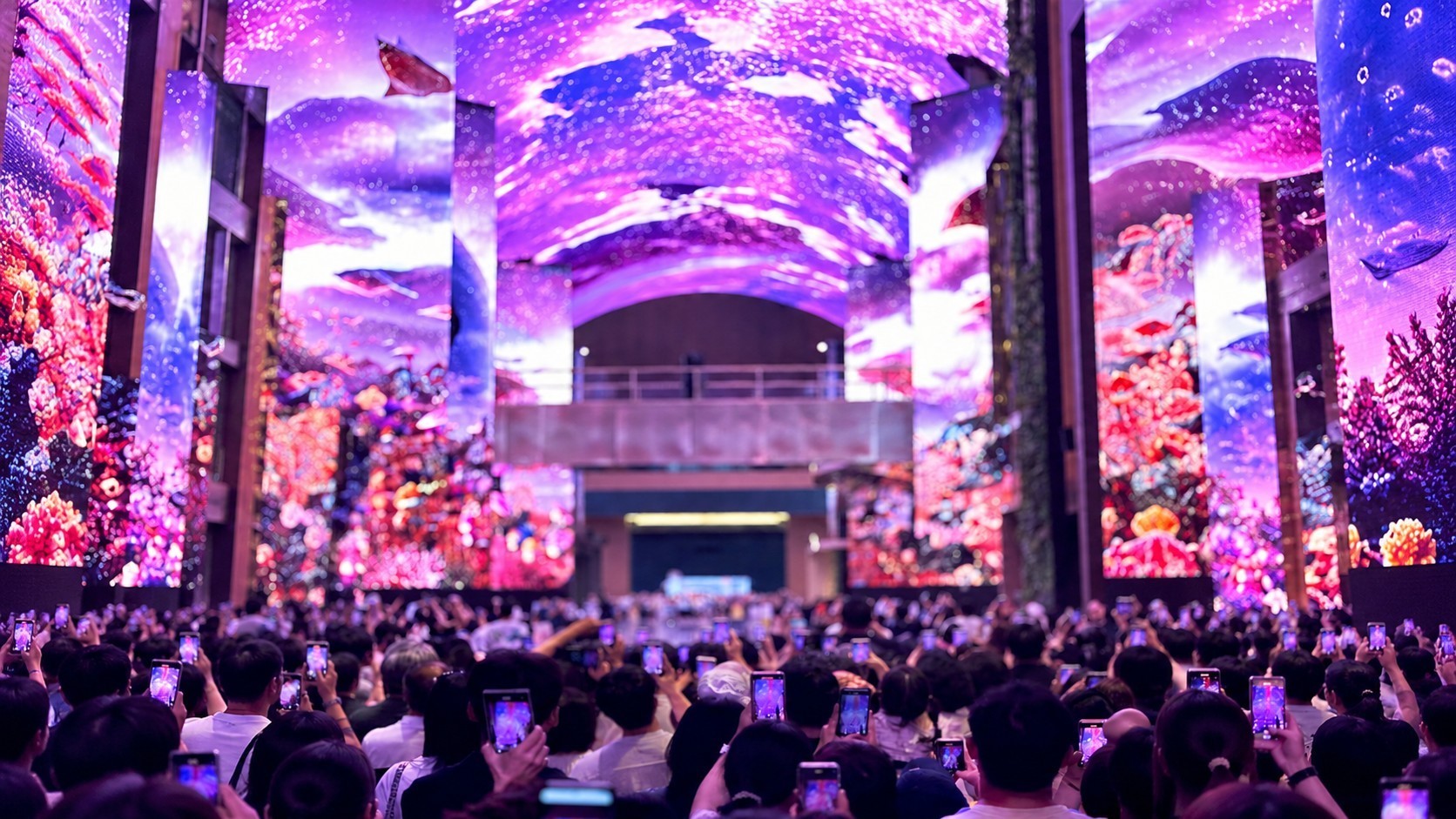
Aurora at Inspire Entertainment Resort in Incheon is a 150-meter media street. It recorded 5 million cumulative visitors about a year after opening. [6] Its signature content is Under the Blueland, known as the whale show, in which a giant whale swims across the ceiling. The show gives visitors a scene to film and share, and a reason to arrive in time for each performance. Between shows, ambient content keeps the street alive, and seasonal programs add something new to see.
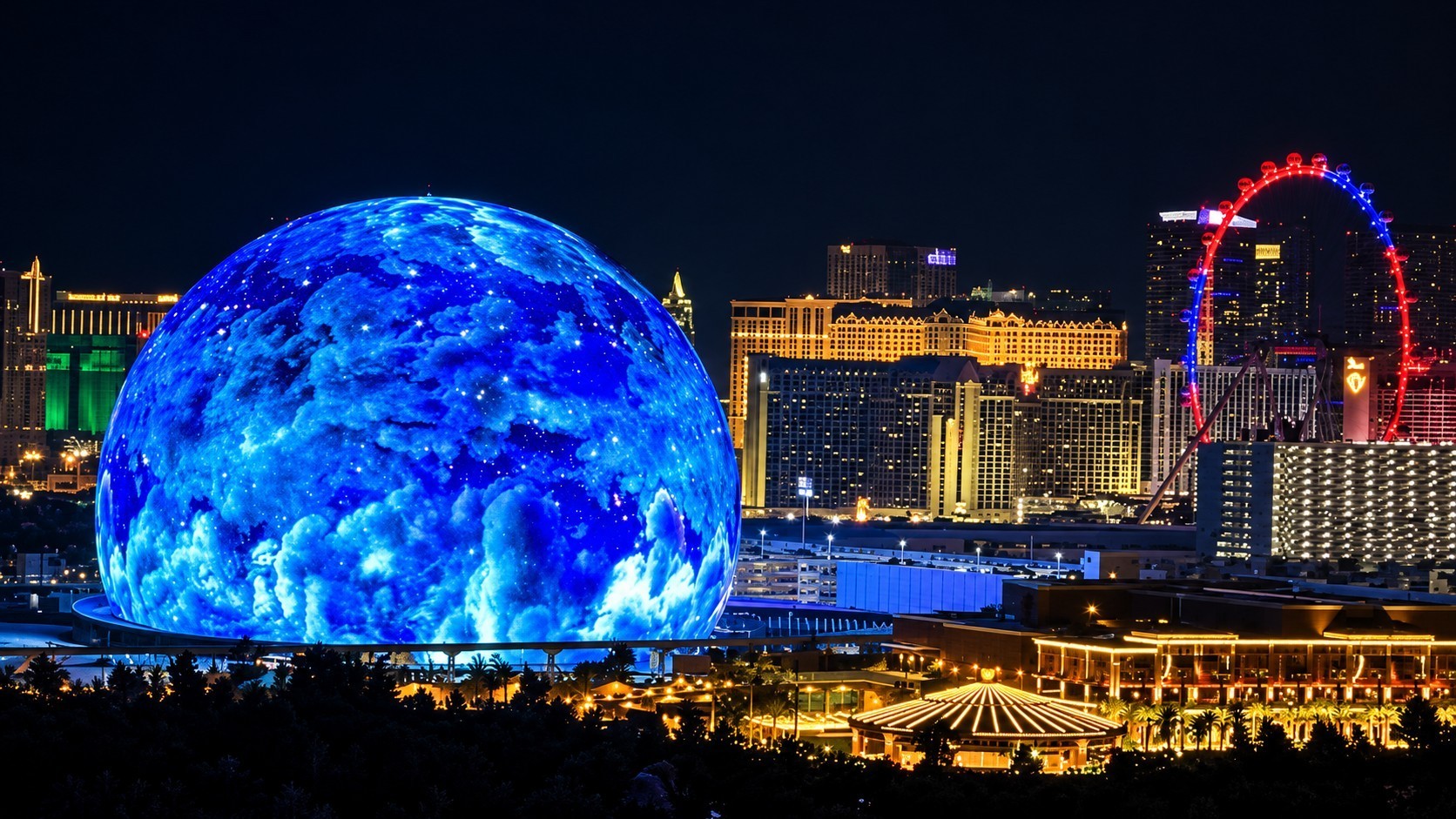
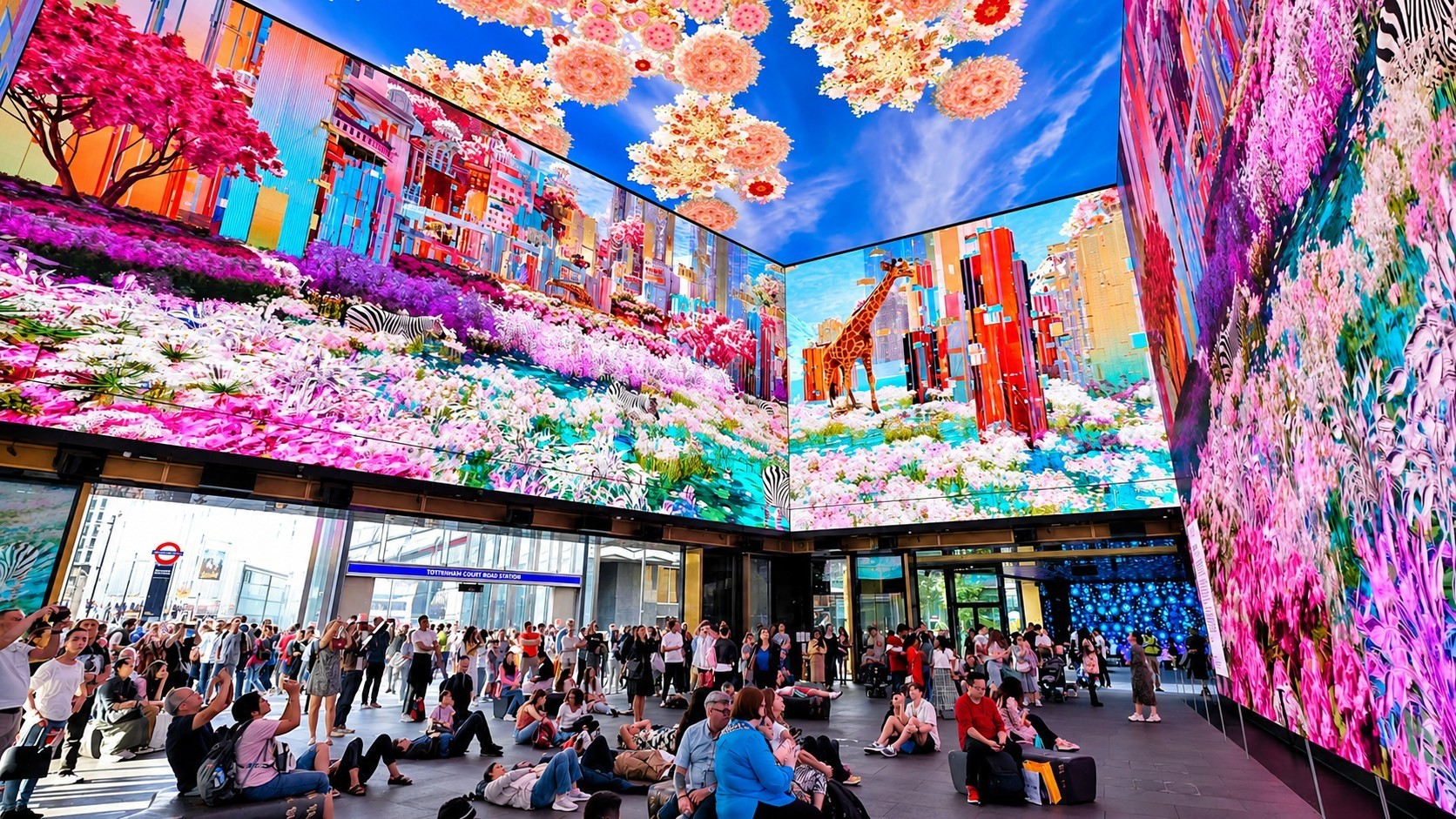
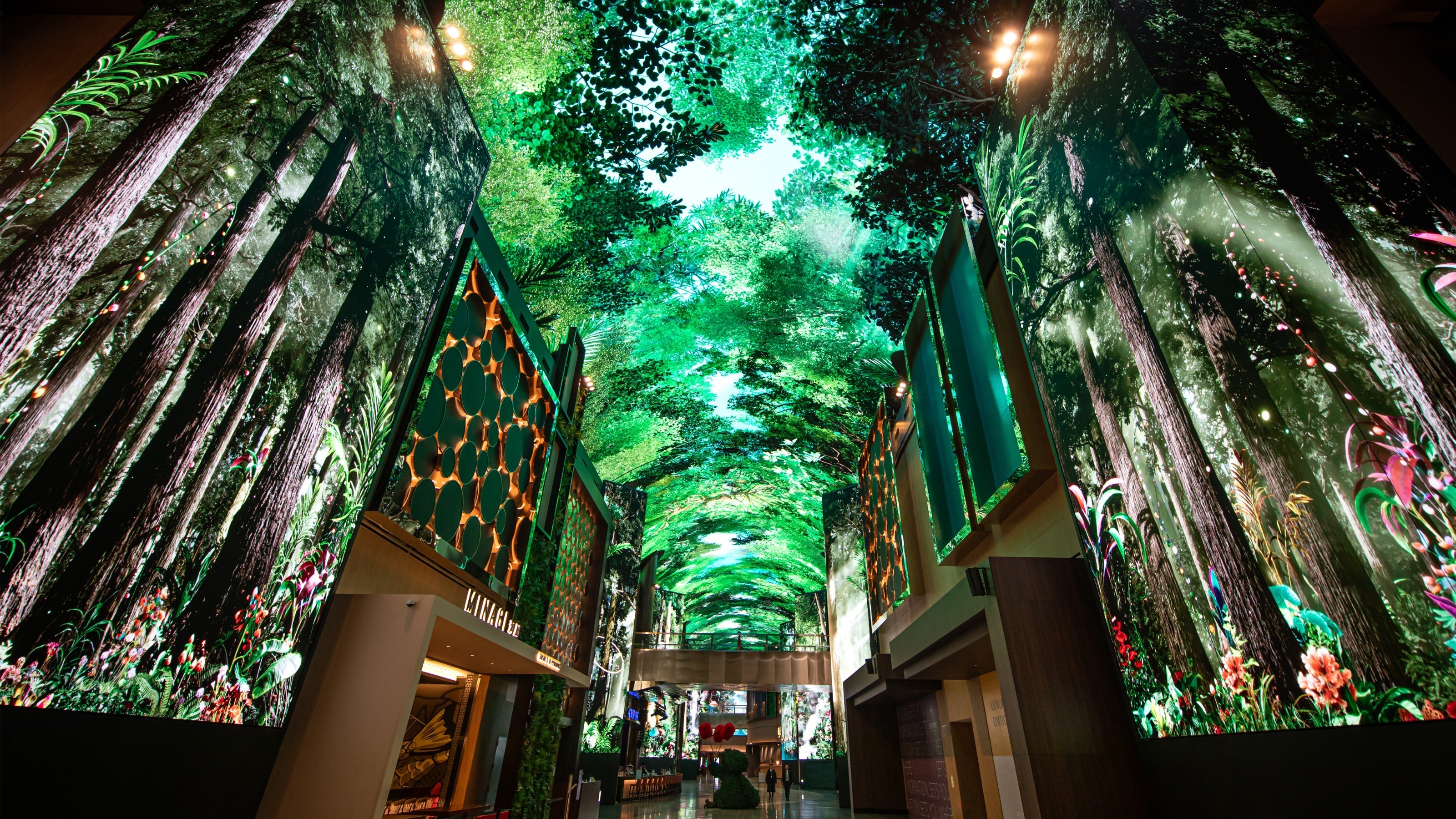
Sphere charges admission. Outernet and Aurora are free. Whatever the model, the media experience itself is what draws people in. That ability to draw visitors is the core of a digital anchor tenant.
What digital anchors offer operators
A digital anchor lets operators design a visitor experience around their site and business goals, then keep that experience fresh through content.
- Scalable to the site. From an entire building to a resort street or one zone of a shopping center, the anchor can be sized to the location, circulation, and scale of the business.
- New content can bring visitors back. The same media infrastructure can refresh the experience for seasons, events, and brands. Keeping a signature piece while adding new programs also creates fresh reasons to reintroduce the space.
- Visitor sharing can spread awareness. Memorable scenes can become touchpoints that promote the space online. According to data provided by Inspire, the whale show accounted for 6,730 of 11,686 online mentions of Aurora, about 57.6%, between January 1 and December 25, 2024.
- More ways to earn revenue. Beyond ticket sales, advertising and brand partnerships can become revenue streams. Outernet combines free viewing with advertising and brand experiences. [7]
Planning for the operating load
Turning these advantages into lasting results means designing content renewal, facility operation, and the revenue model together from the planning stage.
- Content renewal costs and staffing. Separate the signature content from programs that will be refreshed regularly, and plan production scope and budget accordingly. AI can help adapt assets and produce seasonal versions, while scheduled programming and remote management can reduce repetitive work. Final direction and quality control stay with specialists. [8][9]
- Power, cooling, and maintenance costs. Plan screen brightness, operating hours, cooling, and maintenance from the architectural design stage. Solar power integration is also worth considering. The Novartis Pavilion in Switzerland uses a media facade that combines solar cells and LEDs. How much energy a facade can supply for itself depends on the generating area and operating hours. [10]
- Uncertain footfall and payback. Estimate initial build costs and annual operating costs together, and check actual visit purposes and usage. For advertising and partnerships, factor sales and production costs into projected revenue to see how much of the operating cost they can cover. Ad scheduling also needs to be balanced against the visitor experience.
How to build a digital anchor tenant
Installing LED screens does not make a space a digital anchor tenant. First decide whom to attract and with what experience, where they will linger, and how that visit connects to the rest of the space. That anchor strategy should guide the design of space, technology, content, and operations.
In a new development, the anchor's location and role can be set from the architectural planning stage. In a renovation, the work starts when the redevelopment is being conceived: understanding existing customers and circulation, then finding the place and the experience that will create a new reason to visit. The scale and stage may differ, but the principle is the same: plan the space and the media together.
We start from the anchor strategy and plan and design space, technology, content, and operations together. We call this integrated approach Media Architecture. Creating digital landmarks that people seek out and remember is why we stand behind the line "We Make Beloved Digital Landmarks."
Notes and Sources
[1] Shinsegae Property, Starfield Library first-anniversary announcement, May 28, 2018.
[2] Hyundai Department Store Group, The Hyundai Seoul fifth-anniversary materials. Accessed October 28, 2026.
[3] Jewel Changi Airport, 2024 performance announcement.
[4] Sphere Entertainment, FY2024 earnings release.
[5] Outernet, The Now Building first-year visitor figures, October 10, 2024; ALVA, 2022 visitor statistics.
[6] INSPIRE, Aurora five-million-visit announcement, February 17, 2025; supplied social mention data for January 1–December 25, 2024.
[7] Outernet and FreeWheel, advertising partnership announcement, June 3, 2026.
[8] Adobe, guidance on post-production and content variations using Firefly, February 4, 2026.
[9] Samsung, official VXT feature guide. Accessed October 28, 2026.
[10] iart, Novartis Pavillon media façade project profile and press release dated July 4, 2023.